

A federal lawsuit seeking class-action status alleges that Coweta County sheriff’s deputies improperly used the Flock Safety camera network and physical surveillance to track a man involved in active civil rights litigation against the department.
The complaint alleges that Atlanta-based Flock Group Inc., doing business as Flock Safety, Coweta County, its sheriff, and five deputies misused “a surveillance system built without safeguards” to invade the privacy of numerous Georgia residents without a legitimate law enforcement purpose.
In February 2023, two Coweta County Sheriff’s Office deputies arrested Tyler Murkerson, the plaintiff in both lawsuits, after stopping him in a Newnan, Georgia, gas station parking lot for an alleged seat belt violation. According to the allegations, the deputies threw Murkerson to the ground, tased him, and handcuffed him after he exited his vehicle.

Police body camera footage showed Deputy Radford Brooks pinning Murkerson to the asphalt with his body and pressing his forearm against Murkerson’s neck while Deputy James Teare tased him in the chest.
Murkerson faced charges of failing to wear a seat belt and obstructing an officer, but prosecutors dismissed both charges in June 2023.
In September 2024, Murkerson filed a civil rights lawsuit against the two deputies and Coweta County Sheriff Leonard “Lenn” Wood. He alleged that the deputies used excessive force despite his lack of resistance, argued that the seat belt law did not apply on private property, and held Wood liable for his deputies’ alleged misconduct in his supervisory role. Murkerson sued all three defendants in their individual capacities.
Murkerson’s attorney, Christopher Hall, told Atlanta Black Star that the parties resolved all issues in the 2024 lawsuit in August 2026 under a confidentiality agreement.
That same month, the Coweta County Sheriff’s Office publicly disclosed an internal audit of its employees’ use of the Flock Safety system that had flagged several employees’ accounts for review. Three unidentified employees met with their department heads and resigned before the agency completed its audit, the agency said.
The sheriff’s office also announced that it had requested the Georgia Bureau of Investigation to investigate those employees’ conduct and that it would be conducting training for all its authorized Flock users on agency policy and appropriate use of the surveillance system.
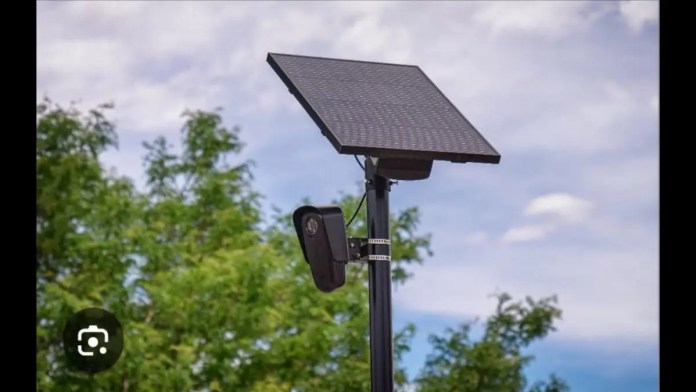
That announcement coincided with investigative reporting by the Washington Post and other news organizations that had identified at least 50 law enforcement officers nationwide charged with or accused of misusing Flock and other automated license plate reader (ALPR) systems.
In about half the cases, prosecutors concluded the officer had used the technology to improperly surveil a wife, girlfriend, former partner, or the former partner’s new partner. Murkerson’s new lawsuit notes that authorities had arrested at least 20 Georgia officials by mid-2026 for misusing the Flock database.
Those revelations about Flock prompted Murkerson, who already suspected someone was surveilling him, to search for his vehicle on haveibeenflocked.com, a public website that tracks Flock Safety audit logs obtained from law enforcement agencies through public records requests.
The lawsuit says Murkerson discovered that Flock cameras had tracked his Toyota Camry over 197 days, from May to November 2025, in five searches attributed to the Coweta County Sheriff’s Office. That surveillance period overlapped with his pending civil rights lawsuit over the traffic stop.
Two searches listed operators as “W. fau” and “R. fau,” whom the lawsuit identifies as Coweta County Deputy William Faulkner and sheriff’s department employee Randall Faulkner. Flock concealed the identities of the other three operators who searched Murkerson, the complaint says.
Around the same time, Murkerson had noticed that Coweta sheriffs’ patrol cars were frequently showing up at intersections along his route to and from work, including parking within a quarter mile of his driveway on a dead-end road. Deputies also parked in the parking lot of his vehicle repair business when he was there, the lawsuit says. And police stopped him during two roadblocks on his usual daily route, including one located on the road to his home.
The complaint alleges that William Faulkner’s distinctive Dodge Hellcat repeatedly appeared at a gas station around the time Murkerson’s usual schedule took him past the station.
When Murkerson told his wife he believed Coweta County sheriff’s deputies were following and watching him, she suggested he was imagining it, the complaint says. But his worry over the surveillance caused him to give up a six-year business relationship servicing vehicles for a neighboring police department “because he no longer believed he was safe doing that work.”
The Flock audit trail subsequently proved that he “was not imagining it,” the lawsuit says.
The Flock platform will not execute a search unless the person using it, called an operator, enters a reason. The complaint says operators listed the reasons for searching Murkerson’s car in 2025 as “info” and “37,” neither of which identifies a law enforcement purpose, offense, case number, incident, service call, or investigation.
Since 2018, Georgia law permits access to captured license plate data only for a “law enforcement purpose,” which the legislature defined narrowly as “the investigation of an offense or activity initiated by a law enforcement agency,” the lawsuit says.
Running a citizen’s license plate and identity through law enforcement databases for a non-law enforcement purpose is a crime in Georgia, the complaint observes, and examining another person’s personal data through a computer network without authority is a felony.
At no time during the Flock surveillance period was Murkerson the subject of any criminal investigation by the Coweta County Sheriff’s Office or any other law enforcement agency, the lawsuit says. Murkerson was not suspected of any offense, had no outstanding warrants, and was not involved in any open case or incident. Prosecutors had also dismissed all charges stemming from his February 2023 arrest more than a year earlier.
“There was no law enforcement purpose for any search of Plaintiff’s vehicle identifier, and Defendants knew it,” the lawsuit asserts.
Murkerson alleges that Flock placed his vehicle on a persistent alert, or “hot list,” that triggered alerts whenever cameras in at least 6,000 Flock networks nationwide detected it. Over 197 days, 76 Flock cameras across Coweta County also captured his vehicle, the lawsuit alleges.
He also alleges that the defendants stored his location data well beyond the default 30-day retention period for standard Flock scans, so that they could access archived location data in order to reconstruct his movements over many months.
“Because vehicle travel is not random, aggregated ALPR data is revealing in a way that a single sighting is not,” the lawsuit says. “A vehicle’s repeated presence at particular locations reflects where its owner lives, works, shops, worships, socializes, seeks medical care, and travels. Searched across months, the resulting record is a map of a person’s life.”
The records the defendants retrieved and the alerts they received unreasonably “revealed the privacies of his life” and constituted illegal searches, in violation of the Fourth and Fourteenth Amendments, Murkerson argues.
The lawsuit also accuses the two named deputies and three unidentified sheriff’s department employees, identified as John Does 1, 2 and 3, of violating Georgia’s Racketeer Influenced and Corrupt Organizations (RICO) Act and Computer Systems Protection Act.
The complaint alleges they repeatedly accessed Murkerson’s personal data through a computer network despite knowing they lacked authorization. It also accuses them of stationing armed deputies near his home and business to “threaten, intimidate and physically confront Plaintiff … in order to deter him from prosecuting the underlying action” — his 2024 civil rights lawsuit.
The lawsuit alleges that the defendants tracked Murkerson’s movements and intimidated him in retaliation for filing his earlier lawsuit, violating his First Amendment right to petition the government for redress of grievances.
The complaint also accuses Flock Safety of negligently designing and operating its surveillance system in violation of Georgia law.
It alleges that Flock created a search tool with a “free-form text field” that allowed users to enter any reason for a search. The complaint contrasts this feature with U.S. Department of Justice guidance issued in 2017, which calls for law enforcement to document an authorized law enforcement or public safety justification for each license plate reader search.
Flock demonstrated that it knew its system was deficient when it debuted a new product called “Audit Assistance” in April 2026 that continuously monitors operator misuse of its platform as “an optional add-on,” the complaint says, noting that Flock only made case numbers mandatory in August 2026.
But Flock still “does not undertake to verify that an entered case number corresponds to a real investigation, or that the person whose identifier was searched has any connection to it,” the lawsuit argues.
“Flock designed, built, configured, hosted and operated an integrated surveillance system whose foreseeable and intended output is a searchable record of the movements of every person who drives past its cameras — including persons, like Plaintiff, who are suspected of nothing.”
The risk that individual operators would use its system “to surveil private citizens for personal, retaliatory, or other non-law enforcement purposes was known to Flock, documented publicly and repeatedly, the subject of criminal prosecutions in Flock’s home state, and sufficiently concrete that Flock designed and marketed a commercial product for the express purpose of detecting it,” the complaint says.
The lawsuit alleges that Sheriff Wood, as the policymaker for the sheriff’s office “with respect to the acquisition, use, auditing, supervision and discipline of employee access to the Flock Safety platform … failed to impose any restriction on the searching of persons,” including “those known to be adverse to the agency in pending litigation,” such as Murkerson.
The sheriff’s custom or policy resulted in deliberate indifference to the constitutional and statutory rights of people whose data was accessible through those systems, the lawsuit alleges. It further claims that Wood knew or should have known that Georgia law requires his agency to restrict access to captured license plate data to law enforcement purposes, criminalizes other uses of the data, and mandates training on proper system use and periodic audits to uncover misuse.
Murkerson says he experienced anxiety, humiliation, and fear for his safety and the safety of his family as a result of the improper surveillance, and also lost income when he ended a business relationship of six years with the nearby municipal police department due to his safety concerns.
Murkerson seeks a jury trial and compensatory, liquidated, and punitive damages, attorney’s fees, and injunctive relief. He also asks the court to order the purging of unlawfully obtained records, the removal of his and other class members’ identifiers from active alerts or watch lists, and to require Flock to validate search justifications in Georgia going forward.
He and other plaintiffs who join the class action also seek $2,500 for each alleged violation of the federal Driver’s Privacy Protection Act.
The lawsuit, filed by Atlanta law firm Hall & Lampros, seeks class-action status on behalf of people whose license plates Georgia law enforcement agencies searched through Flock Safety in the four years before the lawsuit’s filing without recording an investigative justification.
The court has not yet certified the case as a class action, and Hall said the firm has not yet retained any additional class members.
Murkerson’s lawsuit distinguishes itself from another federal class-action lawsuit recently filed against Flock Group in Georgia, Schulte v. Flock Group, Inc., which seeks to represent a nationwide class of individuals whose license plate data was improperly collected by Flock since Jan. 1, 2024.
The Schulte lawsuit is defined by the collection of vehicle data that allows law enforcement personnel “to surveil and stalk individuals for personal purposes” and does not expressly focus on searches conducted without a law enforcement purpose.
Coweta County Sheriff’s Office spokesperson Cpl. Jacob Herbert told the Newnan Times-Herald on Wednesday that the agency knew about media inquiries regarding Murkerson’s latest lawsuit but had not yet been formally served. He said he could not comment on specific allegations in pending litigation.
The defendants generally have 21 days after receiving the complaint to respond in the U.S. District Court for the Northern District of Georgia’s Newnan Division.

